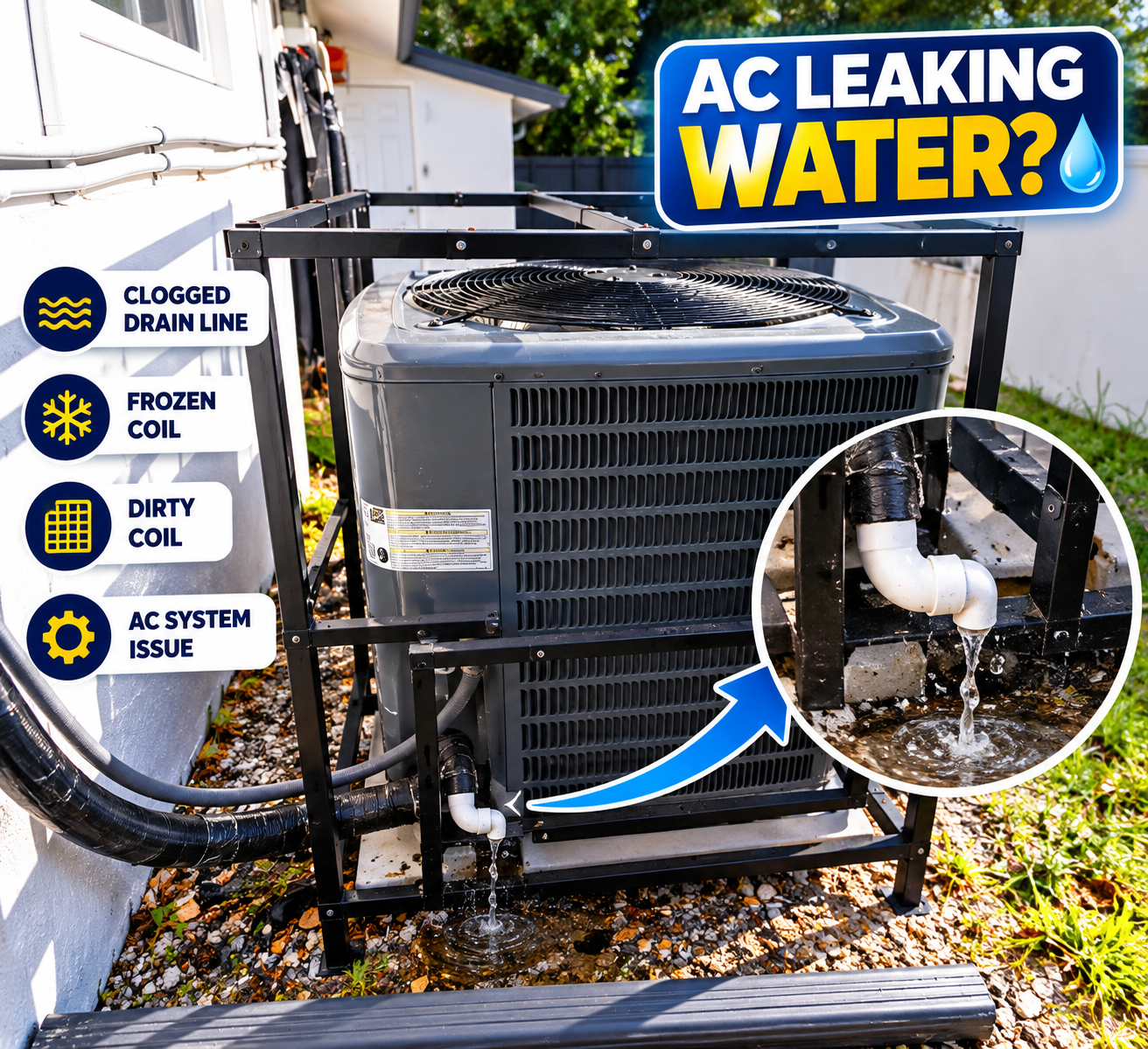
Water Leaking Around Your AC Unit? Here’s What It Means (And How to Stop It)
It is a hot day, your air conditioner is running, but suddenly you notice a puddle of water forming around your indoor air handler or leaking through your ceiling.
A leaking air conditioner is one of the most common HVAC emergencies. While it might seem like a minor inconvenience at first, if left ignored, a small leak can quickly lead to expensive water damage, ruined drywall, and severe mold growth.
Because your AC system doesn’t just cool the air—it also removes humidity—water condensation is a normal part of the cooling process. However, that water should safely drain outside your home. When it doesn’t, you have a problem. Here is a breakdown of why your AC is leaking and what you need to do to stop it.
1. A Clogged Condensate Drain Line (The Most Common Culprit)
As your AC pulls moisture from the humid air, the water drips into a drain pan and flows outside through a white PVC pipe known as the condensate drain line. Over time, the constant presence of moisture makes this pipe a perfect breeding ground for algae, mold, mildew, and dirt.
When the slime builds up and forms a clog, the water has nowhere to go. It backs up into the drain pan and eventually overflows onto your floor or through your ceiling.
2. A Cracked or Rusted Drain Pan
If your AC system is older (typically 10 to 15 years old), the drain pan sitting underneath your evaporator coil may have deteriorated over time. Galvanized steel pans can rust completely through, and plastic pans can develop hairline cracks. Even if your drain line is perfectly clear, a damaged pan will allow water to leak out before it ever reaches the pipe.
3. A Frozen Evaporator Coil
If your air filter is completely clogged with dust, or if your system is suffering from an airflow issue, the temperature of the evaporator coil can drop below freezing. The moisture in the air will turn to ice on the coils instead of dripping into the pan as water. When the system eventually turns off and that solid block of ice rapidly melts, the massive volume of water easily overwhelms the drain pan, causing an overflow.
4. A Broken Condensate Pump
If your indoor AC unit is located in a basement, attic, or an interior closet, gravity alone might not be enough to push the water outside. These systems rely on a small, motorized condensate pump to force the water through the line. If this pump burns out or breaks, the water will pool up and spill over.
What Should You Do Immediately If You Spot a Leak?
If you notice water pooling around your AC, take these steps immediately to protect your home:
- Turn Off Your Air Conditioner: Switch the system off at the thermostat. This instantly stops the cooling process and prevents any further condensation from forming.
- Clean Up the Water: Use towels or a wet/dry vacuum to soak up the standing water to prevent it from soaking into your baseboards, carpets, or drywall.
- Call a Professional: Unless it is a very simple drain clog at the exit pipe, opening up the air handler to repair pans, clear deep plumbing clogs, or diagnose a freezing coil requires an HVAC technician.
Don’t Let a Minor Leak Turn Into Major Water Damage
Dealing with a water leak fast can save you thousands of dollars in home repairs. At Air Light AC, our expert technicians carry the right tools to safely clear deep plumbing clogs, repair damaged components, and get your system draining safely and efficiently again.
Is your AC leaking? Contact Air Light AC today at http://7547771277or visit our contact page https://maps.app.goo.gl/gYTPY399m7mhzTAL9 to schedule an immediate service call!